A day or so later in the pre-dawn stillness I stood under a street light at the bus stop in my neighborhood. I had a courier bag across my shoulder and a helmet in my hand. The first bus of the day would take me to the train station so I could make my way to the airport in hopes of securing a stand-by passage. Take a bus, catch a train, then hope for a plane. There would be many small journeys to complete before The Big Journey could happen.
Journey-wise, I'd just been in Phoenix--just a few weeks earlier. Dwight, my friend since college, had called me in early September saying he and his wife, April, were in a jam. April had had a family emergency back east, and Dwight, a pilot for Southwest, needed to captain his routes. Could I possibly fly down there and watch the kids.
I'd been laid off since late summer and so had the time to help them out. I'd wanted to return east and once again teach high school but had missed the hiring window as well as the start of the school year. At best, I would be subbing. When Dwight called I was in my storage space, unabashedly breaking my renter's agreement like I did nearly every day by working on my motorcycles there. That day, I was getting ready to hear the long-silent voice of a British parallel twin once again announce its presence to the world. I was also wondering what I was going to do next with my life.
I could go anywhere, do anything, but I had nowhere I really had to be. Ex-content writer, ex-project manager, ex-teacher, ex-soccer coach, ex-soccer player, ex-bike racer. Doors I used to pass through easily were closing or had already closed. However, my sense of fate told me that another was due to open, and when I went through it, I'd be a different person than I was before. A sea-change. I was adrift in the mist of a sea-change. I took a seat in the doorway and let my feet dangle in the afternoon sun while Dwight explained their straits. When he finished, I said, "When do you need me there?" and he said, "Really? Really??" I believe I heard April let out a sigh of relief in the background.
For nearly three weeks they needed me. During that time, I walked the kids to school, packed their lunches, bought groceries, lorded over them during tooth-brush-time, and wiped their milkshakes from the backseat of the car. We'd developed a fierce obsession with aircraft carriers that time, so we built one out of trash bags, spray glue, and a swimming noodle and launched it the backyard swimming pool.
Lullabies, I learned, are mandatory in their world, and I was at a loss because I know almost none. For a while I hummed Christmas carols, but after we watched "The Wizard of Oz," my rendition of Somewhere Over the Rainbow became a nightly request. When I first arrived, Dwight had them calling me Uncle Andy as a joke. By the time I left, they meant it when they said it. "You're family now," April had said.
Shortly after my return to Seattle, I got an email from Dwight. "The kids miss you," he wrote. "We're on to pirate ships now. We are going to the hobby shop soon to get a model of one. Damn you, Uncle Andy."
By this time, I'd been reading Guzziology and was learning my way around the marketplace. I'd just learned about the Las Cruces bike, and it shone far more brightly for me than the loops I was seeing locally. In fact, it shone more brightly than anything else in my life. In my somewhat aimless days while I figured out my next step as an adult, I became aware that I was orienting myself around it.
I wrote him back this message: "I have an idea."
Dwight and I have a history of large scale operations. When I moved out west, he drove the truck with me across the country in a non-stop blistering trip that left us each exhausted for over a week. In light of that marathon, the idea of me flying down there and fixing a forty-year old motorbike in his garage, then riding it half-way across the U.S. seemed easy like Sunday morning.
"Sounds great," he wrote back. Great? Not absurd? That anyone else saw eye-to-eye with me on this matter was scarcely believable. A good friend bails you out of jail, the saying goes, but a better one is in there with you. The buddy pass arrived overnight.
A day before I was to leave, I sent him this email entitled "Gear." Here it is in its entirety.
jacket w liner
pants w liner
boots
gauntlet gloves
full face helmet
neckwarmer
sunglasses I left there.
1 jeans (maybe. for job interview.)
1 shorts
3 shirts
3 sox
3 boxer
1 sweater
1 baselayer bottom
1 baselayer top
mocs.
some sockets and stubby ratchets
multimeter
wire
slot and phillips (will these clear TSA?) [No.]
pliers
crescent wrench
flashlight
Did I forget anything?
The all-weather riding stuff I'd found in the closet of a sublet apartment I'd had for the summer. The kid had sold his Suzuki and left the gear for me because he knew I had a bike. It's not the kind of kit I'd buy, but it is of decent quality and made for touring. And it was free.
To save space, I wore the riding gear. Now waterproof and armored, it was difficult for that not to change how I carried myself. With pockets, pads, and stitching in abundance, and with my black full-face helmet, I looked like a special ops team member traveling to his mission by public transportation. When I noticed anyone looking at me, I'd respond with the slightest of nods while slowly crushing my chewing gum between my far-most molars. Yes, I was conveying. Whatever you're thinking about me and what I'm wearing, the answer, as far as you're concerned, is yes.
On the plane, I looked ready for a high-altitude parachute jump. Metaphorically speaking, that's exactly what it was.
This was happening quickly and I was keeping up. But just. Plans of action were revised for greater efficiency, and if/then contingencies were occurring to me almost to the minute. In the notebook I'd been keeping since discovering Guzzis, at the top of one page, I'd written "Pre-Purchase Check list."
-complete
-straight (frame/forks/rims)
-tank rust
-tires
-stuck
-starts
-runs
-alternator or generator
-compression test
-leak-down test
-chrome cylinders
-last inspected
-last operated
-receipts
-oil color...spark plug color...bearing wobble...petcocks... I was editing the list every few minutes.
This idea of mine, this mission I was finding myself on, differed from how most vintage motorbikes are bought and restored. Usually one has a garage, a shed, or a barn on their permanent residence. (Or at least a storage area.) There, on weekends maybe, the bike gets properly disassembled--parts labeled and fasteners put in zip lock bags -- and one system at a time gets sorted, beginning with the motor, continuing to body work and paint, gauges, the electrics, fuel, suspension, and ending with clutch adjustment or carburetor sync'ing. Thorough jobs mean disassembling and inspecting every nut and bolt, and measuring every spec and tolerance. Only then is the bike reassembled and finally ridden, and then it's usually just a short distance. Final tightenings and torquings need to happen as the machine "settles" before attempting a ride beyond the local zip code.
It's a wonderfully focused process that when completed, removes all mysteries. All the sounds within the running engine have a reason you've touched. And when you hear the noise--of a valve rocker arm, for instance--you see the part in your mind.
In expensive magazines from England, a place where I'm led to believe rusty treasures sit moldering in every garden shed, I read account after account of how retirees restore Ariels, Matchlesses, BSA singles, and Sunbeams in pretty much this way. All very linear. All very tidy. I read and I read and all the narratives are the same in that regard.
My plan, however, was far, far different. I'd revived motorbikes The Right Way, the careful way. What I was planning was more of a crash course. That was the thrill of it.
Soon my list had branched into a three-columned flow chart.
1.) Decide whether to buy the loop, which meant evaluating if it could make it to Seattle without major work. (For some reason, removing and opening the transmission didn't seem "major.")
2.) What I would need to address in order to make it reliable. Cables, carburetor work, fluids, points, plugs, etc.
3.) What I would need to ride it 1400 miles.
The trick was to see all the way from one to three before any money changed hands. The odds of ticking off every item on my ever-growing pre-purchase check lists were slim, and chances are that at some point I would encounter a truly complex problem. I needed for that moment of discovery to happen on paper, where I could consider it for a time. Usually their solutions come to me in the middle of the night and I wake up knowing the answer. That said, the discovery of any big problem had to not happen on the roadside. And definitely not on the roadside at night.
Warnings had been issued.
"Chances are you'll find an Eldo or an Ambo without having to go as far as New Mexico," Dave Richardson had said in his understated way. I read between the lines and knew what he was saying. I pursed my lips and avoided eye contact while he'd said that to me, and so my dream withstood his kind admonishment.
Tony, the parts guy had looked me square in the eye and in all seriousness said, "This is totally sketch."
Of course they're right. Even I would not recommend doing it. But the idea that this could work had me by the imagination, and in theory, the check list could be satisfied. Amidst the dark cautions of the wise, this plan glimmered as if I were viewing it through a pinhole camera. It existed! And it could work! I was seeing it from beginning to end.
The stewardess gave us extra bags of peanuts, which I stashed in the pocket of my pants. For later. In case of an emergency. Such was my thinking at that time.
For a minute I made a sidelong study of the crossword puzzle the passenger next to me was trying to complete. But soon I got back to matters at hand and planned my return route on the cocktail napkin that happened to have printed on it a map of the United States. Phoenix to just outside of Salt Lake City. Salt Lake City to Boise. Boise to Portland. Portland to Seattle. Four days at 350 miles per day. On that teeny-tiny map, the journey didn't seem so big.
As the hours wore on, I became almost totally convinced (convinced!) that this plan would succeed and this trip would happen. Imagine my disappointment, when just a day or so later, it fell apart.
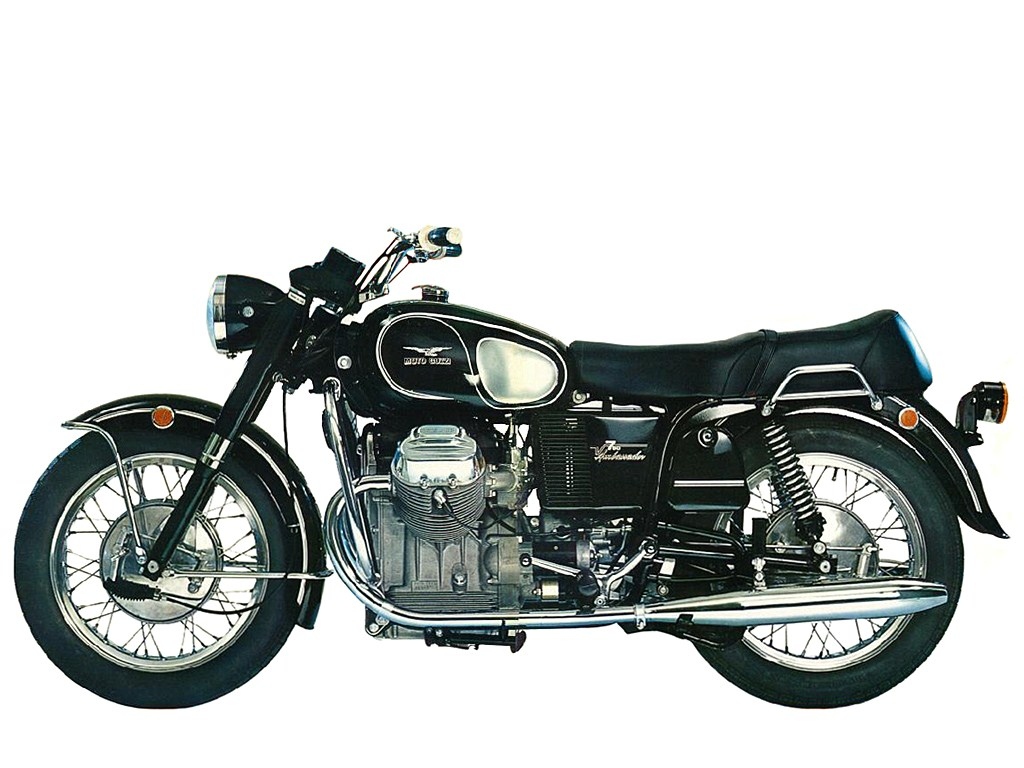
The civilian model

No comments:
Post a Comment