Two rules of buying a used motorcycle:
1.) Don't pay much for a non-running machine.
2.) Buy the nicest example you can find and afford.
I'd broken rule #2 before. I'd broken rule #2 before I even knew there were rules. By playing my role in a story that flowed down, down, down, like a creek over a dam, I'd taken a 1963 Honda Superhawk as a gift. Given to me by David, my best friend living then on the family livestock farm, the Honda was bought for $5 from another, older farmer who'd discovered it resting against one of his outbuildings and never bothered to move it out of the elements for 15 years. It seemed fitting that when I took delivery of the Honda, we had to drag it off the back of a double-wheeled pick-up truck in the middle of a snowstorm in the middle of the night.
This was in rural Pennsylvania, in the small town where we'd grown up, where the creek did in fact flow down, down, down, over the dam when we were kids, and where, until a year ago, I was living. The pitted chrome of the Honda's tank tins, the trapped-in-amber, golden-winged tank badges of the early Hondas, and forward-tilted parallel twin motor was old-exotic. Old-traditional was nearly everywhere we looked. Old-exotic was completely new in our eyes.
It was like we'd again become the same restless teenagers we once were; while so much of what was around us was predictably common, the rusty motorcycle he'd spotted, bought with the cash he had in his front pocket, and given to me, promised mysteries.
And mysteries it delivered. Completely seatless, and with the ignition miswired and therefore the harness critically melted, the trailing edge of the front fender crushed and somehow rolled into a spool, fittings rusted, and of course the engine seized. To the uninitiated, the bike was beyond rescue. To the experienced, it would be a labor of love. Certainly it was a violation of rule #2. Free or not, sometimes free is too expensive. In fact, that's the case often.
Eventually, the Honda lay in nearly 200 pieces spread across the ping-pong table in the basement of my mother's house. It was my most thorough disassembly, and by far my most ambitious project yet. Many of the problems I was having with it were all new to me. On the workweek evenings, or on weekends, arriving at a solution delivered a boost that nourished me to--and hopefully through--the next problem I encountered. On and on goes restoration work, one small accomplishment after the next, one fix after the next. It builds towards completion, not at all unlike writing the pages of a novel. It's more of a patience game than it is a knowledge one, I'd say.
The rebuild unfolded over many, many months and became my primary activity outside of my job as a teacher. My students knew about the bike, as did the mechanics at the local foreign car shop, and an old man in my church who wanted to buy the bike when I'd finished. Locals kept asking me if I knew of a man in my mom's neighborhood who was into old motorcycles, but his name always seemed to escape them. At the body shop where I was borrowing a set of dollies and a body panel hammer, or at the auto parts store where I was buying a spool of wire, or the other auto parts store--the one that carried higher quality nuts and bolts--the man's gray hair and mustache were mentioned in detail, but never his name. Everyone but me in the circles I was traveling knew of him, it seemed. The town is small; how was it we hadn't crossed paths before?
Just a decade or so earlier, just about anyone in that small town where the mill used to be could have helped, or pointed me to someone nearby who could. Most men there of a certain generation understood the fundamentals of metal, combustion, and electricity as much as they did what it was to work. When the mill was open, I remember seeing rows of black motorcycles parked in the company lot. The self-reliant element was still there, but the world had changed. Those people were there, now retired, and with kids grown and gone. But still they lived in their modest homes with clean cut lawns they tended themselves and driveways they resealed themselves every summer. Somewhere among those houses, near the chain link fenced-in lot where the rusting train parts sat rusting amongst shocks of weeds, lived the man everyone knew but me.
Then I remembered a detail I'd failed to remember during the many times I'd tried to remember who this man might be. The brain puzzles me how it works like that. There I was, wondering at the workbench because I was balking over reinstalling the camshaft, and thinking of who might be of help. All at once I just knew where to go.
The image arrived like a phone call: a pickup truck parked at a curb where I'd never noticed it before. Strapped in place, upright in the bed of the truck, a dingy Norton Commando stood proud. At the time, I had no idea what it was, but I noticed it because though a shadow of what it once was, it had the solid stance and confidently-drawn lines of something special. Over a year earlier I'd seen it. And it was just down the street. How had I not remembered that?
The next day after grading a few papers after school, I'd walked over to the house where I'd seen the truck. When I climbed the steps to knock on his door, his wife answered. I said hi and told her my name, where I lived, and that I liked old motorcycles. I concluded by saying, "I think your husband and I need to meet."
She stood in the doorway wiping her hands. "Well, his name is Jim. But everyone calls him Patch."
I wasn't sure I'd heard her right. We traded blinks at the fact she'd just called him, a grown man, Patch. But Patch it was.
As it turned out, Patch had owned the same Honda I was in the midst of. He'd bought it in college, against his father's wishes. And because riding a motorcycle is a drug you either enjoy or reject, the first one sometimes leads to the rapid or eventual ownership of another motorcycle. Or else owning that first one doesn't lead to another, ever. The Honda was soon gone. Patch had traded up to an early Harley Sportster he'd bought with all his money from a student on campus who was intimidated by its size and power.
After college, the Harley languished under dust and within its own turpentine deposits for years in the barns and garages of friends while Patch served in Vietnam, then went to flight school for Delta airlines, then gotten on with his life as a pilot and a husband. Many of the men who stop me at gas stations say, I haven't seen one of those in 30 years because they too have gotten on with their lives. Any chance you want to sell it? they sometimes add. They've gotten on with their lives like Patch had: one motorcycle too soon.
The forgotten dream that was the slumbering giant awoke suddenly when Patch was over 50 years old, and in San Fransisco between flights. It was morning and he was jogging in The Presidio when he heard the burble of the Triumph exhaust note from just up the road. The Triumph was the sound from his youth, the sound that called to many.
The man on the Triumph had pulled to the curb to admire the view of the bay, the way you should if you have a Triumph, so Patch was able to catch up to him. A life-changing stream of information followed. Is this really one of the old ones? How did you find the parts to restore this? And it doesn't cost a lot? And you can still find the bikes? It turned out, you could find them. And over the course of the next few years, when examples of British iron were still complete and somewhat cheap, Patch did find them.
The day Patch lit the torch I was carrying was the day I stood in his bunker-like garage while he fired up his BSA Thunderbolt. Because British bikes until 1975 were kickstart-only, starting one means you never hear the whine of a starter motor. Instead, they go from near-silence to sudden roar, and in that garage I thought it was going to explode. When it settled to idle, the exhaust note through the pea-shooter mufflers was full and meaningful. The overhead light in the otherwise dim garage reflected the highlights of the chromed tank, the handlebar, the rims. It was a gorgeous piece of history, and it sounded earnest and capable. Right then and there, I'd heard all I needed to.
The Superhawk has become one of the most sought after of the early Hondas, but Patch was right: next to the British bikes, it's a thin-walled tin toy. We'd become acquaintances while I worked my way through it, and friends-as-equals when his wife's illness consumed her. During those difficult months, I'd put on the coffee pot so we'd have something to drink when he came over in the evenings and we pretended to work. Sometimes we never even made it to the workbench. We just stood in the kitchen and I listened to him talk.
The summer in the midst of all of that, he guided my purchasing of a 1970 Triumph, the last of the 60s styled 650s. On those evenings in the garage, I often held the trouble light while he bent or squatted near some fitting with a Whitworth wrench. I let him do the bulk of the work because at over sixty years old, he was as excited as I was. The evenings were warm but not hot, the garage door was open into the darkness, and the town was quiet enough to hear the moths flittering about the garage doorway. I was enjoying the moment enough.
It took weeks to revive the Triumph, but the night it was ready, we ushered my mom off of the couch and into the garage where we helped her into a folding lawn chair safely out of the way. When I kicked it to roaring life for the first time in 30 years, the vibrations made it skitter across the floor on its center stand. I'd never seen a bike do that before. It was as terrifying a sight as it was wonderful. My mom clapped her hands together and rolled her head back as if about to take a dramatic bow. "I haven't heard that sound for a long time," she said. Then she shook her head slowly and looked from the bike to me. "Oohh, It takes me back." I tried to play it off as pure fun, but I think the rescue and revival of that old machine was a moment come full circle for everyone present.
***
I trust Patch with anything, and that includes understanding my disappointment over the Guzzi dream evaporating. Just after leaving Wyn's, at the edge of Las Cruces, I called him from a gas station.
I sighed. "I didn't buy it."
"Good!" Patch has the quiet voice of a gentle man. At this, though, he was adamant enough that he almost barked. "It would have taken you two years to sort it all out." Then, in the tones he usually uses, he said, "You did the right thing."
He was right. Patch has lived enough to advocate a slower, more considerate pace to living than I sometimes take. With Patch, there's nothing wrong with having yourself a good wait. Good things come to he who waits. The solution emerges in its own time. Like drawing maple syrup from a tree on your own land, or sharpening a fifty year-old knife with a fifty-year old file because the steel in both is better than what you can find today, his way is the way you can be proud of. This all sounds like a cliche of what it is to be of a certain American generation that's now cool and pure to emulate, but so many will find so much of it so unfashionable, and slow, plain, and annoyingly thrifty, that I doubt his ways will catch on again.
But I get it. Like me, he was a late bloomer and it took some time for him to find his way in the world. It's because of the experiences he's shared that in the lean times I'm in the thick of these days, I get by with less and don't lapse into self-pity. I have enough of what I need to get by and it'll be okay. I oil my boots and they keep on walking. I'm across the country from that small town and I never suspected that distance would make a difference, but to my surprise it does. I call and we talk maybe once a week and so I keep faith in my sense of integrity. His real name is Jim, but the nickname Patch, given to him by his dad when he was just a boy, works on so many levels. To call him Jim would be weird.
Yes, Patch was right about the Guzzi. He was right and I knew it. Further, he was right and he knew that I knew it. He'd taught me the rules of buying used motorcycles, after all.
When we'd finished talking about the bike, he continued, "The weather's starting to turn here. It's almost time to drain the oil and bring the bikes in."
Reflexively, I pictured Pennsylvania in early fall. I imagined the afternoon sun, lower in the sky and therefore gently-spotty through the trees, and the sweet smell of leaves. In my mind I saw the evening color and the settling chill it brought. Imagining isn't really the correct word for how I see my home state. In my mind it just was--as much as my DNA just is.
Of his stable of eight or so vintage motorcycles, the ones he rides regularly he keeps in his garage. He'd wheel into the basement the ones that needed winter time work. From 2800 hundred miles away, I knew the catalog of work the each bike needed because we talked about work. The forks on the BSA Thunderbolt had a clunk. That would be first up. The clutch cable dragged on the Lightning. The Triumph needed reassembled and then it would be simply stunning. The Matchless needed a top end rebuild and a new muffler, at the very least. His hands would be cold from the weather and therefore it would smart that little bit extra if he caught his knuckle on the door jamb as he walked one of the bikes through. I smiled because it's weather I used to know. I smiled, because above all, it's familiar.
He also has that Commando, the one from the back of his pick-up truck half a dozen hears ago. It periodically and suddenly loses all power, and I'm convinced it's the ignition switch. During that call I wanted to pack a moving truck and be there in a week to help fix them all. And in the spring, ride the old roads from on board the old motors, to the old diners, to the Secret Motorcycle Shop, to the Barbershop Motorcycle Shop, to The Family Tradition, and to all the other old haunts. Then to the BSA rallies. And with fingers crossed, maybe even all the way to Mid Ohio. Or to the Triumph rally, the one aptly named Triumph Come Home.
In the midst of those daydreams of roads I already knew, the Guzzi dream remained a disappointment and in some ways a failure. I saw it as a challenge I did not rise to meet at a time when I needed a challenge I could meet.
***
There are two additional rules in buying a used motorcycle.
3.) Only buy a complete or nearly complete bike. Definitely make sure it has all the tinware. (Fenders, tank, side covers.)
4.) Buy when the price it right. And only buy when the price is right.
While Wyn's bike didn't meet rules 1 and 2, it easily met 3 and 4. On the way home, I balanced and rebalanced the equation whose variables were Nikasil, receipts, original. To those I added weather beaten, wiring, transmission, non-running, asking price, distance if I had to ship it, cost of a new transmission if I couldn't fix it.
At the tail end of my journey, just outside of Tucson, I stopped at another gas station. At the pump next to mine sat a tan Honda Goldwing from the 80s. Like all Goldwings, it was fully loaded for long distance riding. Ours were the only two vehicles in the bays. I looked across to the storefront and saw a man sipping coffee at the window.
I never got his name, and I can't remember what I asked to get the conversation started. Probably my old stand-by, How do you like the bike? I'd gone inside for a sandwich because I knew it was late enough that Dwight and his family would all be asleep when I got home. He was just leaving, so we walked back to the pumps together.
I could tell from the tempo of our conversation that it was just going to be a minute-long exchange then we'd part company forever. However, when I told him of my plan to buy the Moto Guzzi, fix it, then ride it to Seattle, he stopped his preparations in the bike's truck box and his whole manner changed. He ambled around to my side of the Wing, then crossed his legs and leaned against it like he was standing at a bar and had turned to survey the crowd behind him. (Gold Wings are that substantial.) Hand on his hip, and coat pushed back, out of the way, he was settling in for a talk. Late forties and stubbly, though recently clean cut, he looked white collar. And he was friendly enough to laugh at his own stories. He reminded me those plywood cutouts of silhouetted hobos people set against trees in their front yard.
He was from Florida. He'd left a week earlier. His sister had just mailed him some money in Phoenix so he could get something to eat. Why he didn't have money, or access to money, I have no idea, and I'm sure it's not an upbeat story. However, people ride motorcycles long distances for all kinds of reasons. I'd read Neal Peart's Ghost Rider: Travels on the Healing Road, so I reserved judgment and just enjoyed the talk. He told me about running out of gas, of taking a short cut across the scrub and bottoming the bike out on the rim of a ditch he'd tried to ride over, then having to hold the bike up for nearly half an hour until a pair of hikers showed up and helped him get it clear, just as he was about to give up and drop it. He talked about catching showers at truckstops and napping where he could when he needed a break. With all of this he seemed fine, if not happy. He was having a time of it.
He was wearing jeans and boots and a bomber jacket, not quite proper highway motorcycle attire. When he got his helmet out of the trunk box, I saw that it was in fact a little league batting helmet. It didn't even have a chin strap. He reminded me of Jack Nicholson's character in Easy Rider.
He dug in his pocket for a few seconds, and then bent to one knee down near the starter solenoid. It had failed, so the only way to start the bike was to hot wire it. I think he used one of those bottle openers people carry on their key chains. Whatever it was, after a few flashes of sparks between the solenoid's terminals, the Honda puttered to life. I had to smile at that. Half a minute later, he rolled out, not exactly an expert on the bike, but not a beginner either.
Ten minutes down the road, I saw his running lights in the distance amidst the other traffic. Like small semi trucks those Gold Wings are. As I approached and passed, I saw that his posture never changed; he never turned to check his mirrors. He just sat tall in his batting helmet, cruising comfortably at 75 in the center lane, maybe lost in thought. I think he said he was headed to California, then up the coast. I wish him luck.
Whenever I see misfits like that on bikes I wonder if I'm not seeing my own personal Ghost of Motorcycling Future. Will I wind up completely trading the engaged world of middle-class America for the one of my own pursuits? Will I be the guy with the encyclopedic knowledge of moto-esoterica and rusty social skills? Will I be that guy wandering the highways during his middle years?
And then I think, so what if I become that guy. Those types harbor no quiet desperation in their lives, as far as I can tell. They seem to have followed their bliss. The Guzzi Adventure promised knowledge I wanted to have, a problem I wanted to solve, a bliss I wanted to follow.
The next morning I slept until 8 a.m., so when I walked into the kitchen, Dwight and his family were already at the table eating sliced fruit and having coffee and juice. Before leaving Las Cruces, I'd texted him this message: "Bike needs too much work. Not the time or place for it." He'd replied, "Take as much time as you need."
Between discussing with the kids the pirate ship we would build, I explained to Dwight and April the details of why I hadn't bought it. My disappointment in myself was evident in my posture alone, I'm sure. Dwight repeated, "Take as much time as you need to fix it. We've got the room." April seemed to feel the same way.
We all talked some more and had our meal. During this time, the thought of it hung in the back of my mind. While washing my coffee mug in the sink, with eyebrows arched in growing excitement, I said to them, "If that's the case, if that's the case, then I'm going to buy it."
The statement was a complete non sequitur to the topic we'd evolved to in our conversation, but Dwight looked to me as soon as I said it. It was as though he too had kept the thread running in his head while we all had talked of pirate ships and dog walks. I felt my self-respect rise the moment I'd said it because adventure had come knockin' and I'd found what I believed was the courage to open the door. Dwight seemed happier too. Adventure was dwelling amongst us again.
I called Wyn soon after and left a message saying that I'd thought it over, and if the motorcycle was still available, I'd like to buy it. That afternoon, my phone rang and I recognized the number as Wyn's. Dwight and the kids were reading a book, but he and I made knowing eye contact as I disappeared into his office to take the call.
Two minutes later I emerged with that gleam in my eye people tell me I get when I talk about the things I am passionate about. I was practically en pointe. Dwight looked up to get the news. In response, and I chewed my gum that much louder from behind my crooked smile. There was no need for words.
"When do you leave?"
"Tomorrow morning. 6 a.m."
Dwight smiled. "You're insane."
"Oh, I'm in the thick of it now!" I roared. Slumbering Nemo swung his head my way in surprise and the kids took their cue and immediately tried to outshout each other. I have no idea what they were saying, but they were shouting it.
From here on out I didn't care if I failed. I was about to break a few of the rules, and maybe lose a few bucks, but not trying this bothered me more. I hoped Patch would understand my folly.
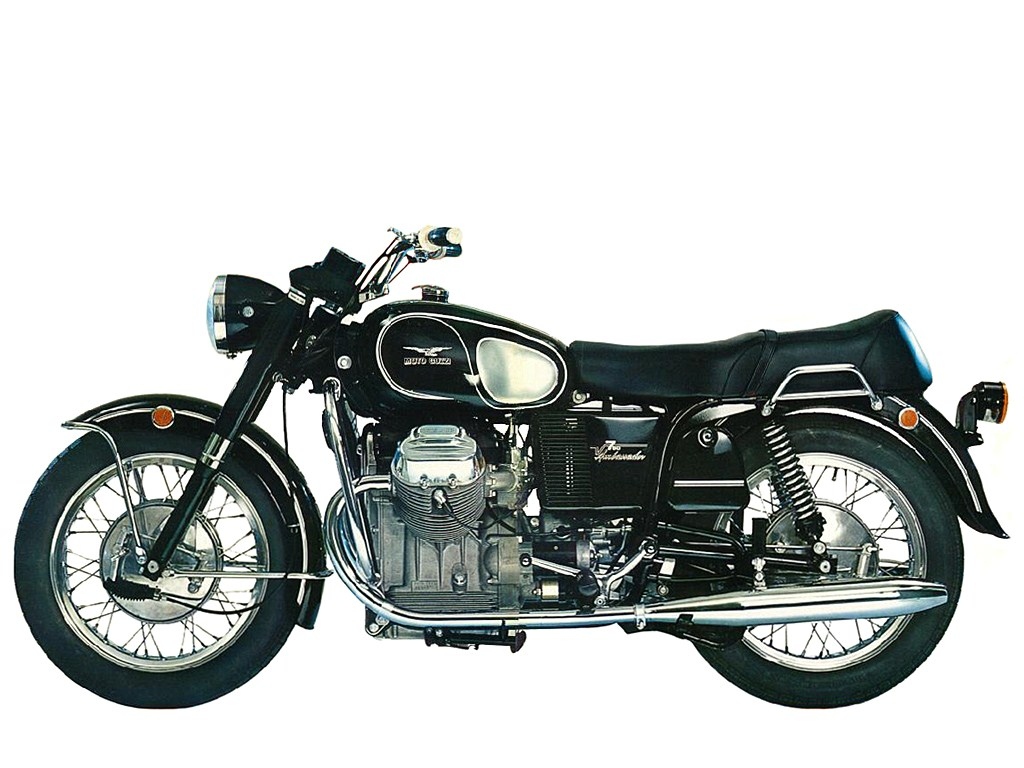
The civilian model

No comments:
Post a Comment