A crash on the highway between Phoenix and Tucson caused a delay of over an hour, so by the time I reached Dwight's, it was not exactly early. The windows in the neaby houses were dark. A few, I saw, were lit milky-blue from bedroom televisions. I would learn that the lifestlyes of primary school kids pretty much shaped the neighborhood dynamic.
Dwight had a special kind of tie down helper made for motorcycles called a Canyon Dancer. Rather than wrapping straps directly around the handlebar, the Canyon Dancer cupped the grips and gave purchase from there. When hooking tie downs to the trailer and drawing them tight to the Canyon Dancer, it immobilized the front end, gave the best leverage possible, and stayed clear of the bike's cables and wiring. It made for a simple and effective operation.
I say this because offloading a motorbike by one's self is not altogether easy. The tension on the tiedowns means relaxing one side causes the bike to list heavily to the other, sometimes quite suddenly and with a tumble immediately following. The trailer was a minimalist one, consisting largely of a length of channel not much wider than the bike's tires, so there was no room on which the centerstand or kickstand could get purchase. With the tie downs in place, the bike looked like a tightrope walker holding a balance pole across his shoulders. If you took the trailer's wheels into consideration, positioned in outrigger fashion as they were, the whole contraption looked like a catamaran.
Back and forth I went around the trailer, left to right, until I had the straps loose enough I could lean the bike gently and slide off first one Canyon Dancer, then the other. I made sure that when the bike was free and clear I was on the right-hand side, holding the brake lever, so I could control the descent. The Moto Guzzi eldorado weighs 545 pounds without fluids or travel cases and I was holding it while standing in the driveway, somewhat beneath it. I opened the brake lever and prepared to ease the bike down the ramp but nothing happened.
Then I remembered the broken transmission. It was locking the bike in place. When I had pushed it up the ramp with Wyn and his wife'd help, I had squeezed the clutch lever, thereby disengaging the transmission from the rear wheel, so we could move it. Now, from where I was standing in Dwight's driveway, I could see the lever on the left handlebar, but it was altogether out of reach. Since I'd disconnected the tie downs, there was no reattaching them. All I could do was stand there balancing those 545 pounds in place. At lease it was warm that evening.
And so it goes for the solo adventurer. When problems arise, there is no one to lean on, and in this case, that was literal. When I was younger I could squat 500 pounds and had two strong legs and able Achilles, I might have turned my back to the Guzzi and shouldered it like Atlas, then sumo-walked it off the trailer. Maybe I could use my belt and sling it over the clutch lever from where I was standing then clamp it in my teeth. It wouldn't be the first time I'd done that kind of thing. Or maybe I could reach one of the discarded straps with my boot and lift it to my hand and use that instead of my belt. Maybe I could hand-over-hand walk my way to the back third of the bike, grab it by the shocks and try to lift the rear wheel only off the ramp and onto the driveway. The bike might wedge against the trailer and be okay until I could scramble to the front and take it by the fork lowers in order to do the same. Solutions, solutions.
I leaned the Guzzi into my shoulder a bit so I could fish my phone from my pocket and call Dwight. Bothering him was not something I wanted to do, but it was the least dangerous of all my options. The phone rang but went to voicemail. The same with April. Unless some guy walking his dog wandered by and felt like helping out, it was up to me.
I couldn't stand there all night. I weighed my options again and then from nowhere Dwight was marching silently in the driveway in pj's and deepskin slippers. He'd heard the phone and earlier had heard the garage door open, so he knew I was home. He'd put two and two together and snuck out so as not to wake the kids. Together we got the bike off the ramp without me herniating any disks, without so much as chipping a tooth, even.
Once into the garage, because we didn't know the technique to operate the Loop centerstand, in order to lift the bike we had to use a spindly roadside jack. For anyone reading this who knows Loops, that detail right there should speak volumes about my unfamiliarity with these machines.
In the days that followed, though the bustle of his family life continued, the Guzzi was the centerpiece of discussion for Dwight and me, and at times, his son. It usurped my role as the dinner guest. It was the new kid in the neighborhood, the one with neat toys, like heal-toe shifting and a built-in throttle lock. To say it was the elephant in the room--in a good sense, would not be a stretch. The day after we'd offloaded it, I began disassembly. Dwight was home when I took it apart, and because I'd waited until mid-morning, he remarked, "I can't believe you weren't up at six doing this."
Ask anyone who's ever taken the time to stare into the eye of a major project for the first time. It requires pause to wrap your head around what you're about to do. To just start sawing two-by-sixes, for example, or shoving the post hole digger into the soil, is a good way not to get the back patio built correctly. The pause is a gathering of concepts needed, of organizational ideas, of courage, really. You almost have to walk through it once in your head before you reach for the wrench. Think of Nicholas Cage's momentary pause during "The Lowrider" scene in "Gone in Sixty Seconds." Once you can see your way "into" what lay ahead, you'll feel the stir of that most valuable of commodities in project work, and that is Momentum.
Momentum! Finger circling in the air, Patch and I used to shout that to each other. Andy, my projects have stopped, he wrote me after I'd moved to Seattle. Matt and Jerry [at the secret motorcycle shop] say you need to get back here and bring the Momentum with you. They tell me I won't get them done otherwise!
Though I hope not, he might be right. Without Momentum, the siren call of the TV after a while, gets tough to resist, and soon the bike has a blanket on it, a blanket of cotton or worse, dust, or a holiday wreath, or the lawn tractor has made it unreachable. Those are all nails in the coffin. Momentum gets you out there to the garage, to the basement workroom, and into one tiny bit of progress at a time, even if it's just an optimistic drip of Kroil into the threads of a rusted nut before you head to the grocery store for dinner bread. That is enough because it keeps you thinking about the task, and so lets your subconscious solve the bike's problems when you're miles away from your garage.
I'd never owned a bike like this, with footboards and hard cases and chrome trim and shift linkage of that design. It was all so un-British and un-Japanese. Plus it was heavy. Every part looked heavy. Eric at Moto International had given me a primer on how to remove the transmission (also something much different than British or Japanese design) so I had a faint idea of how that would go. I say faint because when Eric showed me, he circled his arms above the table in front of us, but there was nothing there. The engine he was using in this "demonstration" I could only picture if I used my imagination.
For resources, I had a copy of Guzziology, the Premier manual, the owner's manual, and a few photocopies and notes from Mothershop International. By noon the day after bringing the bike to Dwight's, I sensed I had enough Momentum, so it was time.
Here are a few tips to keep in mind when undertaking a major disassembly. None of these are secret, just sensible. I'm sure everyone has their own way of going about these tasks. This is just mine.
1.) Take photos of how things are before you take them apart. Which way does the gear indicator on the side of a Honda 350 point when in neutral, you might wonder. Be to take a picture. It takes all of ten seconds and it just might save you many many minutes.
2.) Drawings are even better because you can make exploded views and add notes. This works well for small images and nooky depths a camera might not catch, like which notch the clip rests on the carburetor needle.
It's nice to use a notebook for this because when you're done, you've written a journal of all you've done. To page through them is to study Dr. Frankenstein's notebook. Maybe a detail within can provide a clue to help you think your way out of a future jam. (Yes!) Also, you can see how far you've come. The things you once had to draw, you now know like a song.
3.) Get a stash of zip lock bags. Sandwich and freezer sized. I bought these before beginning the Guzzi.
4.) Ditto for Post it notes. They go in the zip lock bags as labels and supplemental drawings. They're also good for shopping lists.
5.) If you have any space at all to spare, establish a north/south/east/west orientation for your parts. In other words, decide which way the bike you're temporarily "building" is going to face. Lay the parts accordingly, rather than in a pile or helter skelter. That way you can find the front/left/right/rear parts quickly and things don't get mixed up. Exhaust brackets are a good example of this. Header pipes take only a second to differentiate, but the muffler brackets or engine mounts to some bikes you can turn like Tetris pieces for minutes before you get all of the bolt holes to align.
6.) Reassemble as many fasteners as you can as soon as you can. Put axles through hubs rather than leaving them apart, for instance. Random nuts and bolts become "leftovers." Funny as that is, it's not quite hilarious. Well, sometimes it is.
Fixing the transmission was the first task because it was the deal maker. If it was an easy fix, I'd gotten a deal. If it was destroyed, I had problems. Disassembly began with this:
Remove the seat. (Four bolts.)
Remove the tank. (Two long bolts and two fuel lines.)
Remove side covers. (One long bolt and two prongs each.)
That exposed a few cables of wiring running in sheaths along the top tube, with wires descending to their destinations along the ignition or charging systems. Dusty greasy bundles of the stuff. I would deal with that later.
After removing the sidecovers, I could kind of see the transmission. Because the Guzzi was engineered more like a tractor than a motorbike, the transmission looks just like that on a rear-wheel drive car. It's a big aluminum housing shaped like a salon hairdryer that women in curlers read magazines under. It's as big as a medieval war helmet and it's bolted to the aft of the engine. It's known as the bell housing because that sounds better than hairdryer or helmet.
And for me, that was all that was obvious about it. I had no experience to tell me what to expect. Usually motorcycle transmissions operate from the basement of the engine case, beneath the crankshaft and bathe in the same oil as lubricates the entire motor. This one, however, bolted to the motor and interfaced via a shaft; the motor has a crankshaft and the transmission has an "input" shaft. The two lock together on splines.
With cars, you can lower or "drop" the transmission from underneath the car, but with the Guzzi, the frame is permanately in the way so you have to make the motor just about as small as you can, then slip it out of out the rear or the side. Only then can you remove the transmission. Eric had pantomimed me the side-exit method, so that was my plan.
Down you must go. Down to the engine block and V cylinders. Like a clearance sale, everything must go. Most of it is intuitive because I could see the nuts and bolts that held the various parts in place. And so the arrangement of disassembly in the corner of the garage grew. The sheer number of parts I'd just removed meant the finer details and exact order of their assembly overwhelmed my memory. I had to wonder how much difficulty I would have getting it all back together. Pictures and drawings. Pictures and drawings. A spring of unknown origin bounded to the floor at one point, but I carried on. If nothing else, this was an exercise in anxiety control, a near-claustrophobic tunneling into an old Italian world.
This is the contents of disassembly: take off the bulk of the ignition system, the entirety of the exhaust and fuel systems, remove or reposition relevent cables, and remove the pedals and footboards. All of that is much quicker said than done. At the aft end of the transmission is the driveshaft. Also undo the clamps around the rubber boot that surrounds the driveshaft's u-joint and fold back the boot so as to see the transmission's output shaft splines mate with those of the u-joint. Also remove the battery, battery tray, and air filter--a metal box the size of a patio walkway block.
"Also...also..." I write. There was a lot to remove. And how could I forget the alternator or generator, depending which has been fitted. Whether generator or alternator, it rests protected though in fragile fashion between the cylinders. Stock generators are sweatered-forearm sized. Mine had an alternator retrofitted. It was as big as a cantelope. The seams along the bottom of the tank had been flaired outward to accomodate it. Off it went, but not before unplugging the spades labeled "E," "F," and "N" and tucking that run of wires out of harm's way.
Because the front half of the frame is triangular like that of a bicycle's, there's more room up high by the rider than there is down low by the pedals. The triangle opens upward. I put Dwight's roadside jack under the engine, and lifted until I sensed the motor was supported enough to remove the mounting bolts. Though still connected to the driveshaft, the motor wobbled top-heavy on the tiny jack platform and scrap of whatever we used to cushion it. Dwight crouched on one side of the motor, and I on the other. From that point on, someone's hands were always on it, readjusting in order to hold it steady while not getting pinched. As we advanced the motor upward, sideways, and forward, our dialogue fell into step with that of heavy-industry laborers.
"Coming your way. You got it?"
"Yeah...Looks good here."
"Alright. I'm taking it higher." [pause] "Free and clear."
"Try it now?"
Wiggle-wiggle.
"...Almost. Hang on." Wiggle-wiggle. "Ouch."
Silly as it sounds, after a while I started saying "Wiggle-wiggle" out loud. It helped me to keep my movements small and controlled. It was hot and my forearms were shiny with perspiration as if I'd been running on a treadmill for an hour. Such strenuous labors in such small spaces. We wore blue Nitrile gloves like surgeons but the fingertips were of course shredded. I sensed I had severe, false shadows made by dirt smears around my cheekbones from where I'd used my forearms to wipe itchy drops of sweat off of my face.
We got the driveshaft disconnected so the motor sat awkwardly free within the frame and sharp at every angle like a kidney-stone. Eight or so bolts later and I was sliding the transmisison off of the clutch and driveshaft. Wiggle-wiggle.
Then I carried it to the workbench. In my arms it was simultaneously hollow and yet substantially occupied with heavy parts. That quality made it feel like a safe or a bomb. Which if those apt comparisons it was, I would find out later. That was enough for the day.
The next morning I would sneak into the garage before six a.m. to get an early start. Dwight's five-year-old son heard me, and followed me out. I have a photo of him, sitting on a stool near the bench, wearing only his briefs, and looking at the camera with early morning eyes. He looks like an overworked child laborer.
We had no bench vice in which to clamp the transmission, but I found two concrete blocks in Dwight's yard, so I wrapped them in two of April's old shirts and made due just fine.
The transmisison diagram from the Mother Shop I had posted on the wall opposite the bench and studied many times for many minutes at a time. The speedometer takes its cue from the transmission, so its whip-like cable and housing runs into the transmission case. I'd been unable to disassemble it earlier, so now it sat before me on the bench. In Guzziology, Richardson cannot seem to stress enough the care one must take when removing this cable and the damage that can occur if done sloppily. He repeats this caution in different chapters and has boldfaced and underlined it every time.
"A caution on the removal and replacement of the speedometer drive," he writes as a heading in chapter 10. He continues from there.
Because this bike had come from the southwest, it had no rust to speak of, yet the brass speedometer fitting had bonded to the aluminum transmission case. Despite my care, the fitting moved like caramel beneath my wrench and was soon ruined, the cable still in place as firmly as ever. I was stuck, as far as I knew. But of course, quitting was not an option, and time was kind of a commodity, so I had to find a solution--the least intrusive one as possible. Eventually, I would dremel parallel slots into the fitting so I could get good purchase with a 13mm wrench. Then, I expanded the transmssion case with a torch and immediatelty quenched the brass with ice cubes, so it shrunk away from the case and a gap might open in the threads. Believe it or not, that problem took three days to solve.
Dwight was with me when I unbolted the transmission cover and drew it apart. As I slowly brought the cover away, interlocking stacks of gears emerged. In the film of remaining transmission fluid on the floor of the case were visible half a dozen glistening shards of metal, long and pointy like barracuda teeth. I looked at where the spring, my initial guess and cheap repair, should be. It was there, completely intact. For a moment, we were quiet. I was quiet because the situation just got more complicated. Dwight was quiet because he too realized this, and like a good friend, he gave me a second to be with my thoughts.
Then he said, "Ooooo," his voice trailing away.
"Yeah...Well, we know it's not the return spring," I replied.
It was looking less like a safe we'd just cracked and more like a bomb, but the bomb had already gone off.
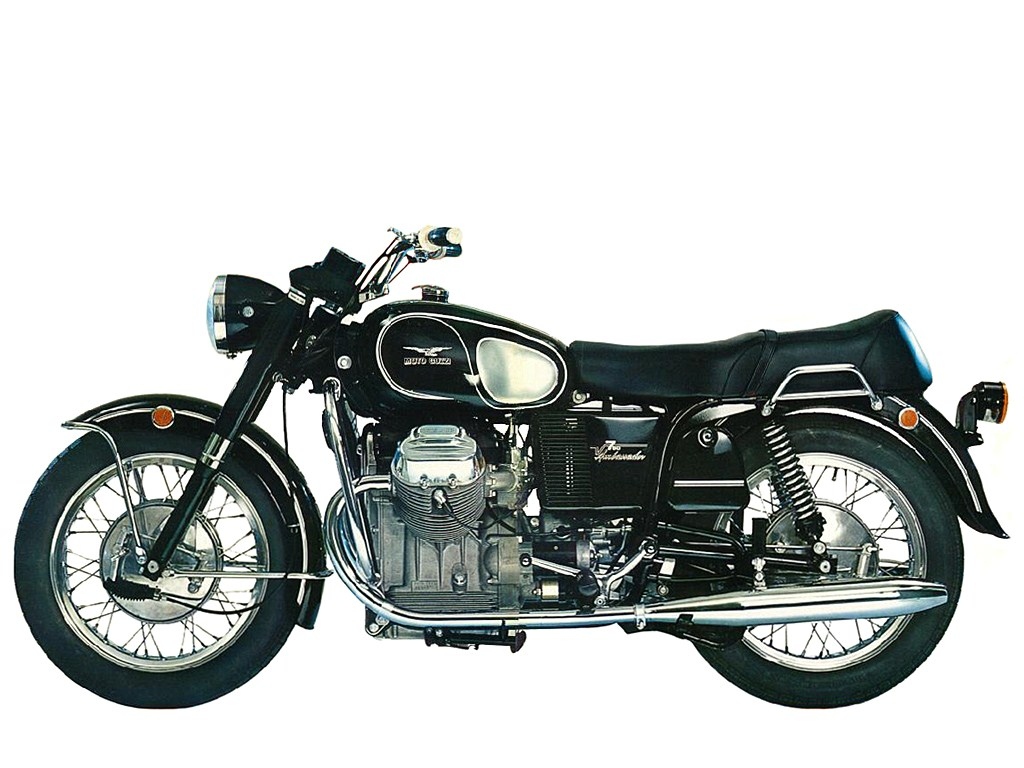
The civilian model

hope you got your momentum back.....this was a good read
ReplyDeleteExtremely good read !
ReplyDeleteThere seems to be something missing... oh, yes... THE REST OF THE STORY!!!! The was just cruel. I'm committed with you and I'm left in the bowels of the transmission with an unbroken spring.
ReplyDeleteNo one likes a quitter...
ReplyDeleteI agree. As Paul Harvey would have said "where is the rest of the story " ??
ReplyDelete